


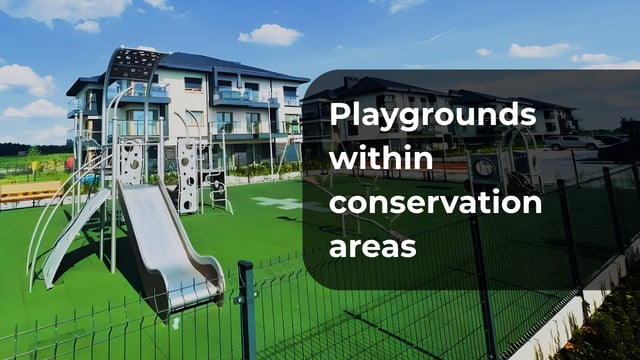
Playground Design for Historical & Conservation Zones
Designing a playground within a heritage-protected area is a task that requires exceptional sensitivity. On one hand, local authorities and private investors (such as developers and hotel owners) strive to create modern, safe, and engaging play spaces. On the other hand, strict heritage conservation regulations and international guidelines impose numerous restrictions regarding visual impact, color palettes, and the historical character of urban furniture.
For investors and landscape architects, this often means finding a delicate balance between the high functionality of playground equipment and the preservation of historical integrity.
International Heritage Regulations and Playground Design
When locating playgrounds in protected areas, such as historic parks, ancient town squares, or sites listed on national heritage registers, every project must align with specific conservation standards. While safety is governed by the EN 1176 standard across Europe, aesthetic integration is managed by local heritage bodies.
In the United Kingdom, Historic England emphasizes the "Significance of Place," often requiring bespoke designs that tell a story. In France, the Architectes des Bâtiments de France (ABF) frequently demand high-quality, noble materials like stone, metal, or wood, while in Germany, the principle of "reversibility" is key, ensuring that any modern intervention can be removed without damaging the original site.
Common requirements across international markets include:
- Strict limitations on vibrant, high-contrast colors.
- Use of materials and forms that harmonize with the existing architectural context.
- Minimizing the visual dominance of large structures.
- Preserving the historical layout and existing mature greenery.
A Challenge for Landscape Architects and Municipalities
Professionals responsible for urban development must reconcile several key aspects:
- Compliance with strict conservation guidelines.
- Maintaining high play value for children.
- Full safety compliance with international standards.
- Seamless aesthetic integration into the historical fabric.
Not every playground manufacturer offers the flexibility required to meet these sophisticated design demands.
Inter Play - Tailored Solutions for Historic Spaces
As an international playground manufacturer, Inter Play provides equipment designed to thrive in both modern leisure zones and sensitive historical environments.
One of our greatest advantages is our extensive color customization. Beyond classic vibrant tones, we offer a "Nature & Heritage" palette, muted shades that blend perfectly with stone facades, historic parklands, and landscaped gardens.
This allows designers to match the equipment with:
- Historical building facades and stonework.
- Natural park vegetation and forestry.
- Existing heritage urban furniture.
- Specific conservation officer requirements.
Collections Optimized for Heritage Zones:
- LIMAKO Collection: Where classic play meets muted elegance. Elements can be finished in greys, browns, or beiges to reduce visual noise. View LIMAKO series.
- SFERO Collection: Even our most iconic 7.5m structures can be customized with subtle colors to act as a sophisticated architectural highlight rather than a visual distraction. Discover SFERO details.
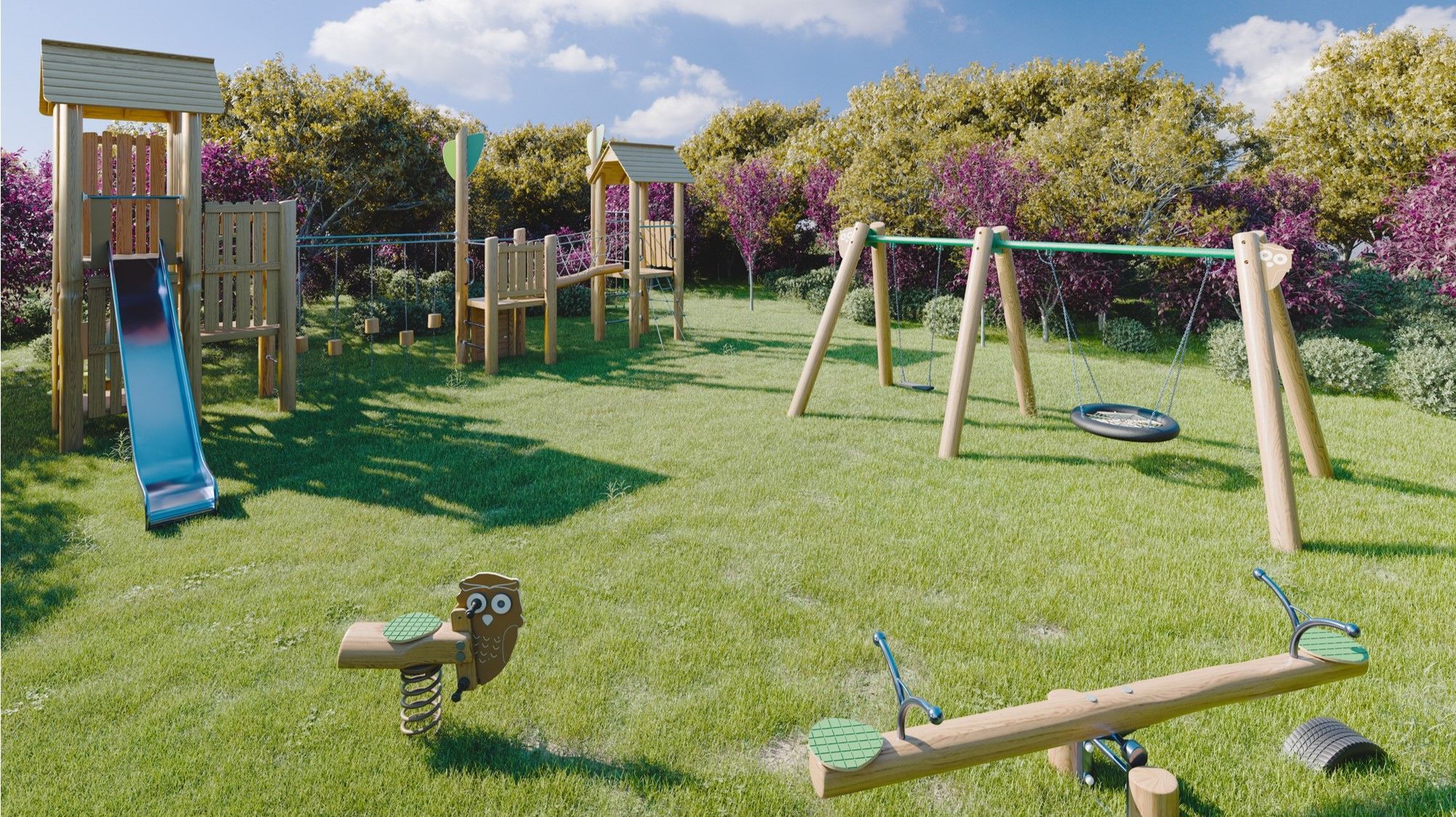
- ROBINIA Series: Crafted from natural, durable Robinia (black locust) wood, these structures offer an organic look that is often the preferred choice for historic woodland parks. Explore ROBINIA collection.
Equipment with Low Visual Impact
In many heritage locations, the scale of the equipment is critical. Inter Play offers numerous minimalist solutions that provide high engagement without obstructing historical sightlines.
Examples of subtle, high-value play solutions include:
- In-ground Trampolines: These provide immense fun while remaining nearly invisible from a distance. Our unique Trampoline Design Studio allows you to create jumping mat patterns that reference local history or motifs. View Trampolines.
- Net Structures (Linarium): Rope-based designs offer transparency, maintaining open views of surrounding monuments while providing challenging climbing routes. See Net Structures.
- MONTO Collection: With over 60 products including embankment slides and tunnels, MONTO uses the natural topography of the site, turning hills into play zones without adding bulky structures. Check MONTO collection.
Global Support for Designers and Investors
We understand that implementing a playground in a conservation zone involves complex formal challenges. Inter Play supports partners from the conceptual stage, offering:
- Technical advice on color selection and material finishing.
- Customization of products to fit the unique character of a site.
- Consultation on layout composition to ensure heritage compliance.
Our experience as a playground manufacturer for international markets ensures a smoother approval process with conservation authorities. Contact our specialists today: Contact Inter Play Experts.
Playgrounds that Respect History
A well-designed playground should never be a foreign body in a historical landscape. It should be a natural extension, a place that breathes life into the space while honoring its past. With the right choice of materials and forms, it is possible to create a safe, modern play area that exists in perfect harmony with history.